

Levski end Bulgarian monopoly
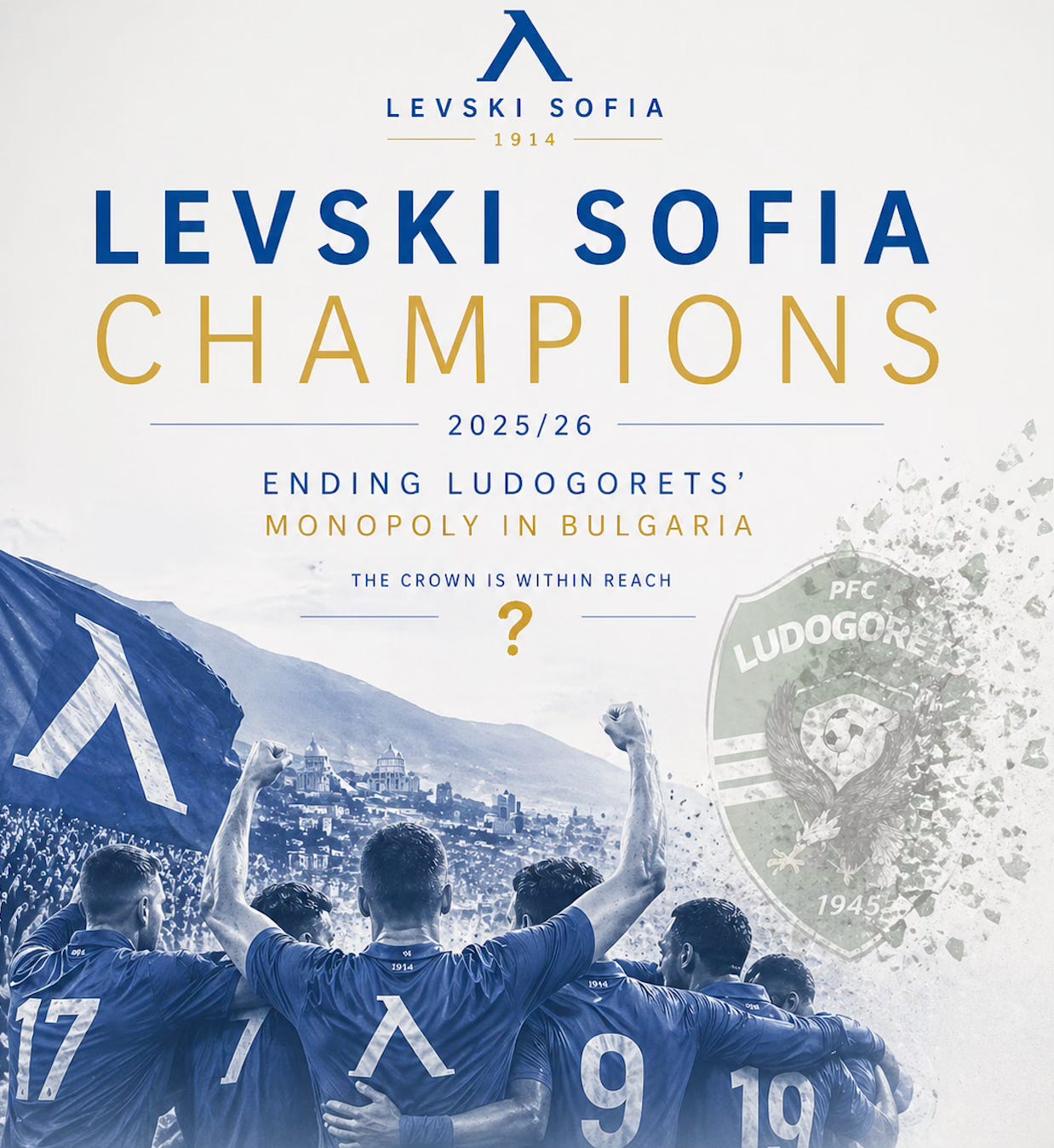
Levski Sofia the first team to end over a decade of dominance from Razgrad side Ludogorets.

Bulgarian Series Part 1:
Over the past few weeks I have spent time in Bulgaria scouting and building a database on every side in the top flight. Watching teams live, studying tactical identities, analysing squad construction and understanding the environments surrounding each club has given valuable insight into a league that often feels overlooked from the outside.
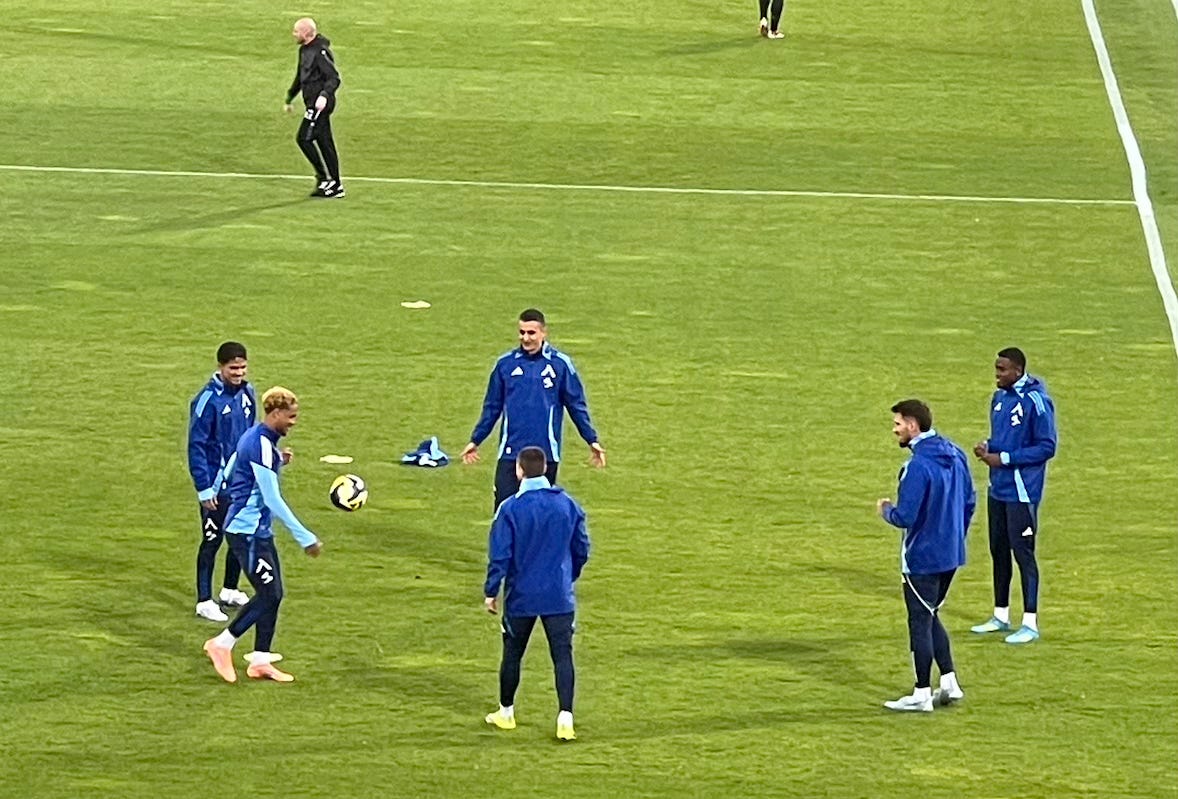
Throughout this series I will explore some of the major narratives currently shaping Bulgarian football. Looking at where clubs sit within the country’s football landscape, the cultural nuances attached to different fanbases and identities, the talent pipeline within the league and some of the emerging Bulgarian players beginning to stand out. There will also be a focus on younger profiles currently operating in the division, recruitment trends and how Bulgarian football compares stylistically with neighbouring leagues across the Balkans.
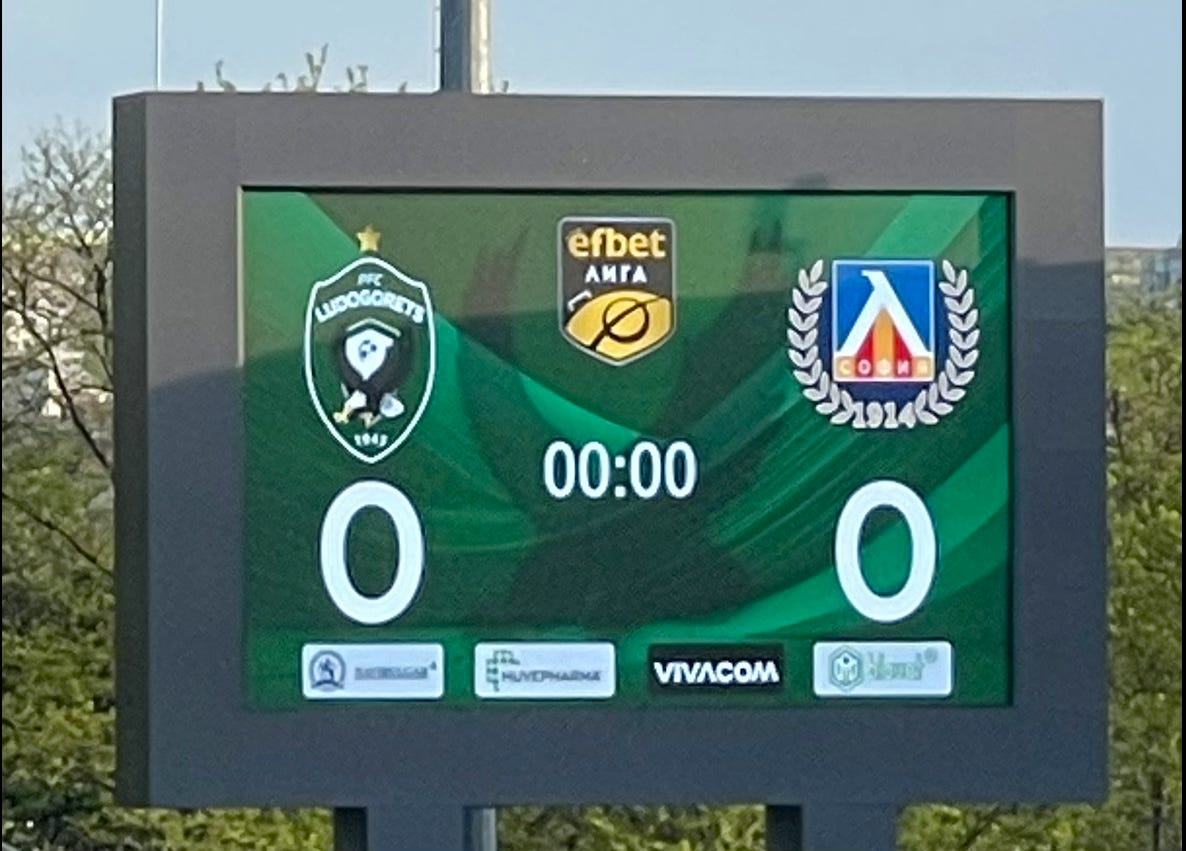
For the opening piece, there felt like only one place to begin.
The new champions. Levski Sofia.
For over a decade, Bulgarian football has existed under a single narrative, Ludogorets Razgrad setting the standard and controlling the title race. The pattern began to become set in stone as Ludogorets were turning dominance into routine. That grip for the first time in a long time has been abolished. Levski Sofia have quietly built something far more sustainable than a short-term push, instead a side grounded in structure, consistency, and control. With these key pillars finally Bulgarian football sees a new champion for the first time in 14 years and hope for a more competitive league in general going forward.
Bulgaria’s positional football dominance:
A key contextual factor when analysing the Bulgarian league is the overall tempo of the competition. Compared to neighbouring leagues such as the Romanian SuperLiga or the Turkish Süper Lig, the Bulgarian top flight is generally played at a slower rhythm, with fewer consistently high-intensity transition moments and a lower concentration of elite-level athletic profiles across the league. In Romania and Türkiye, matches are often defined by explosive transition attacks, aggressive counter-pressing and individual athletic superiority in open space.
Within Bulgaria, however, the tactical landscape allows more controlled and positional styles of play to flourish when executed at a high level. Teams capable of dominating space, circulating possession efficiently and manipulating opposition structures through positioning can consistently control matches. This creates an environment where a tactically refined positional approach, such as the one implemented by Levski Sofia, can become particularly effective over the course of a league season.
Levski Sofia’s: Method towards success?
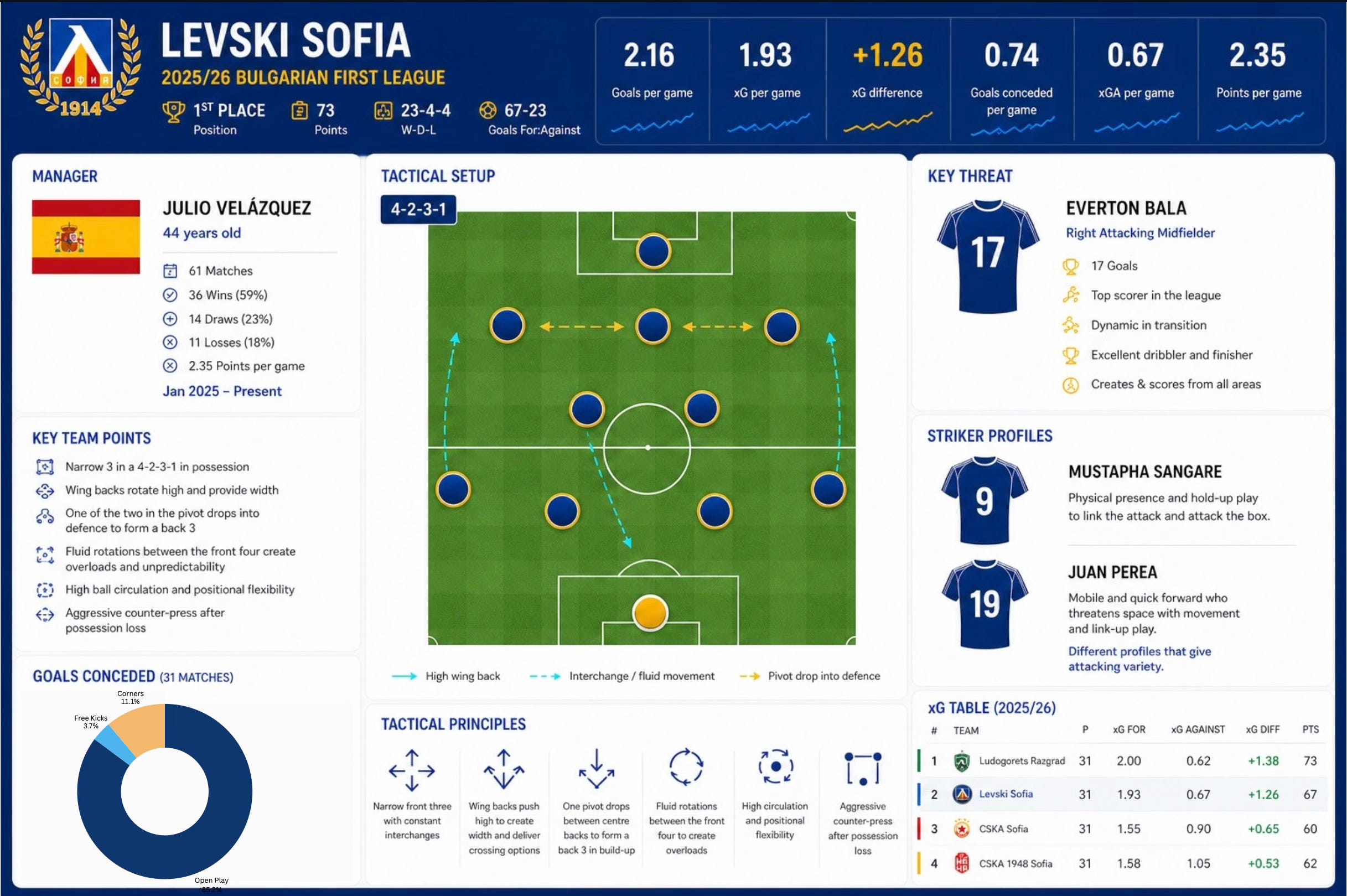
Levski Sofia under their current structure present as a clear positional team built on control, territory, and structure, rather than chaos or transition.
At their core sits a 4-2-3-1 framework, but the system is fluid in its behaviour. One of the double pivot consistently drops into the defensive line during build-up, creating a back three to stabilise first phase circulation and generate overloads. This allows Levski to progress cleanly and dictate tempo early in possessions .
The front four operate differently to a traditional 4-2-3-1. Rather than holding width, the attacking midfield line naturally condenses inside, creating narrow occupation between the lines. Width is then almost exclusively provided by the full-backs, who are key to the entire attacking structure. Their positioning is aggressive, often high and wide, and they act as the primary outlet for progression and final third delivery.
Build-Up Identity: Structured and Repeatable
The following patterns you will see in the diagrams below come from a match report I had previously worked on specific to Levski’s game with Lokomotiv Plovdiv - as I felt it was a good example of the repeated patterns often seen
Levski are a side that value structure over improvisation.
They build through:
Controlled circulation with high pass volume and accuracy
Positional rotations between the pivot, centre-backs, and full-backs
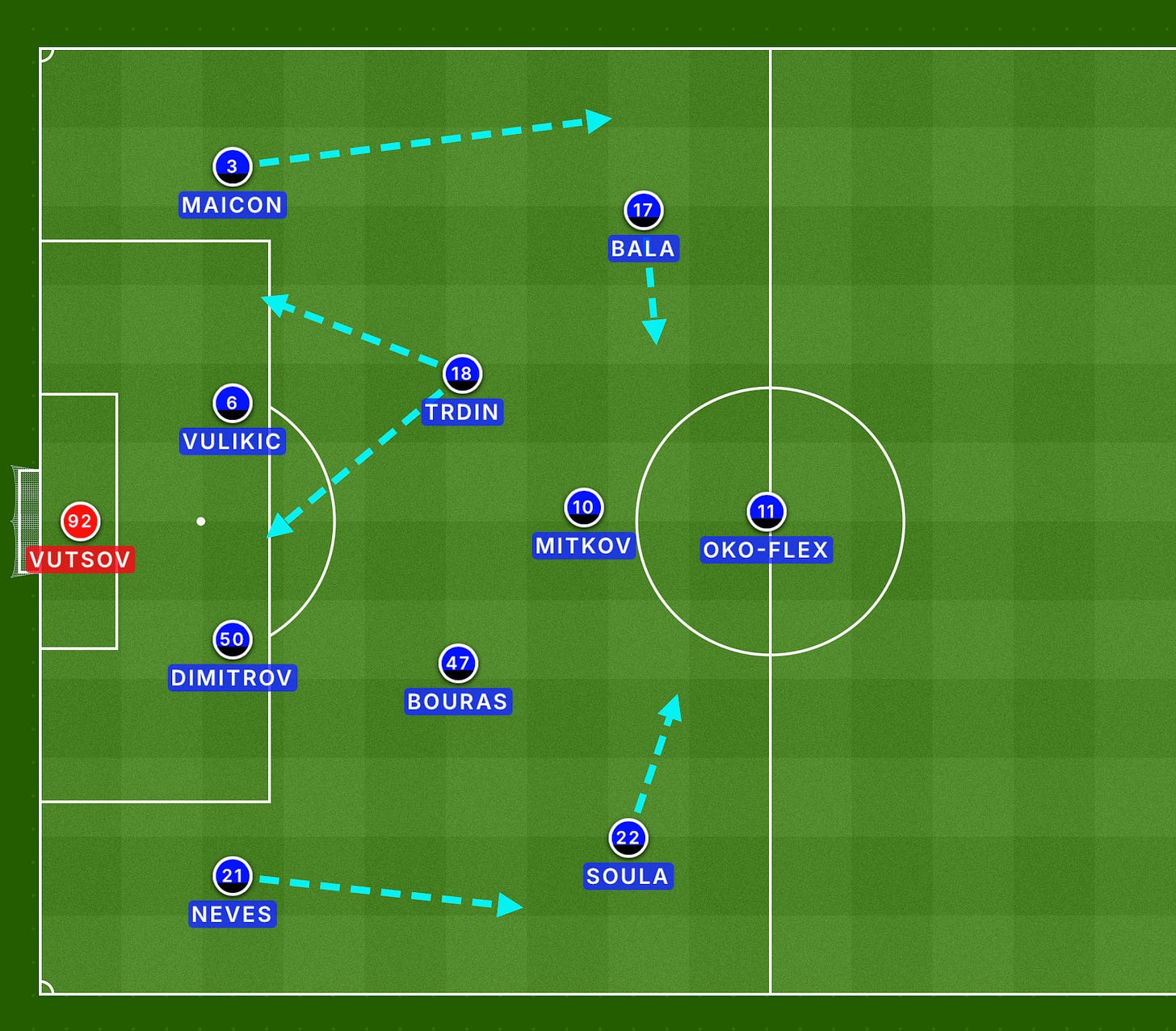
First third rotations in game against Lokomotiv Plovdiv 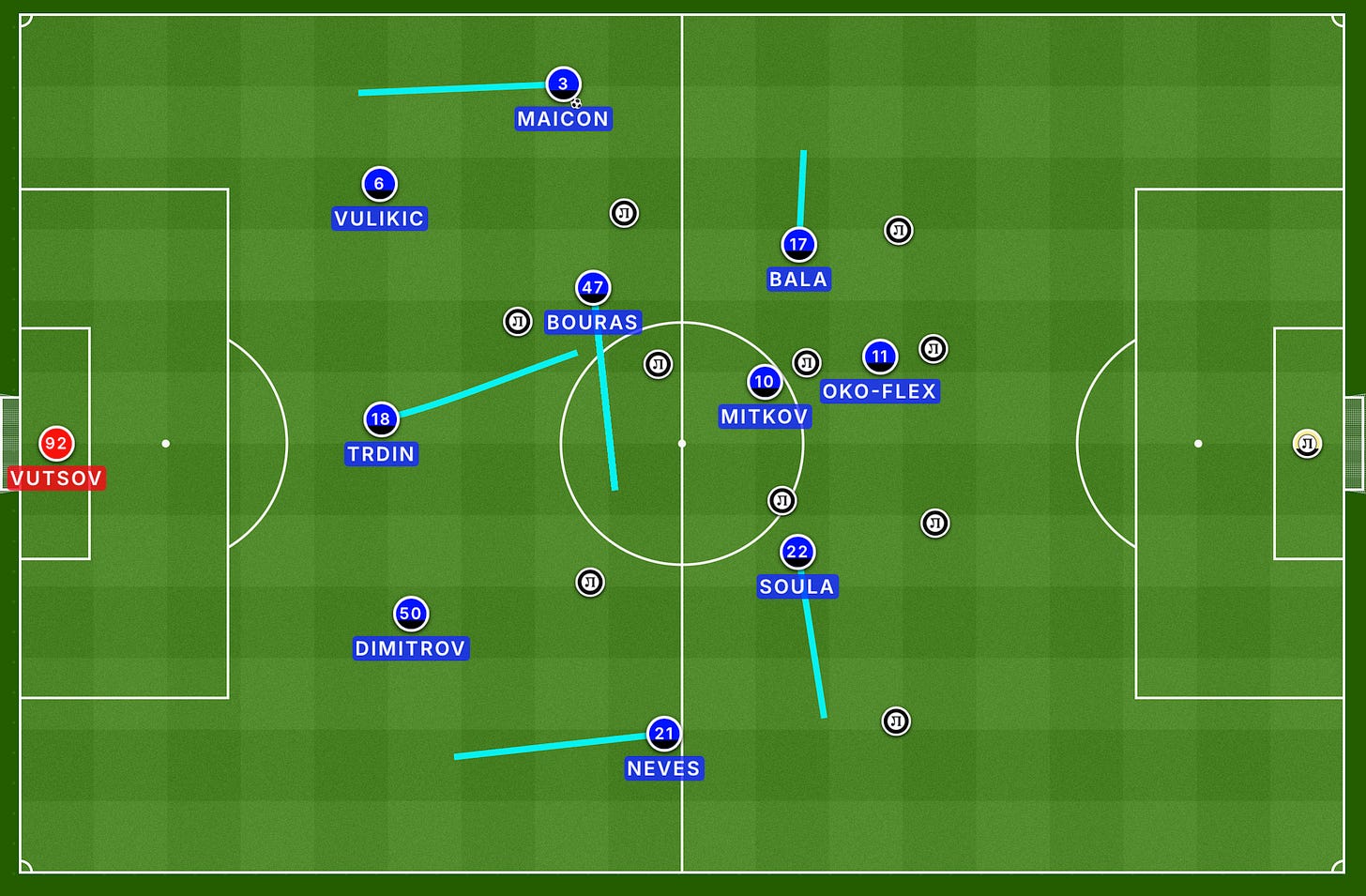
A middle third graphic put together from their match against Lokomotiv Plovdiv A clear intention to create 3v2 overloads in the first phase
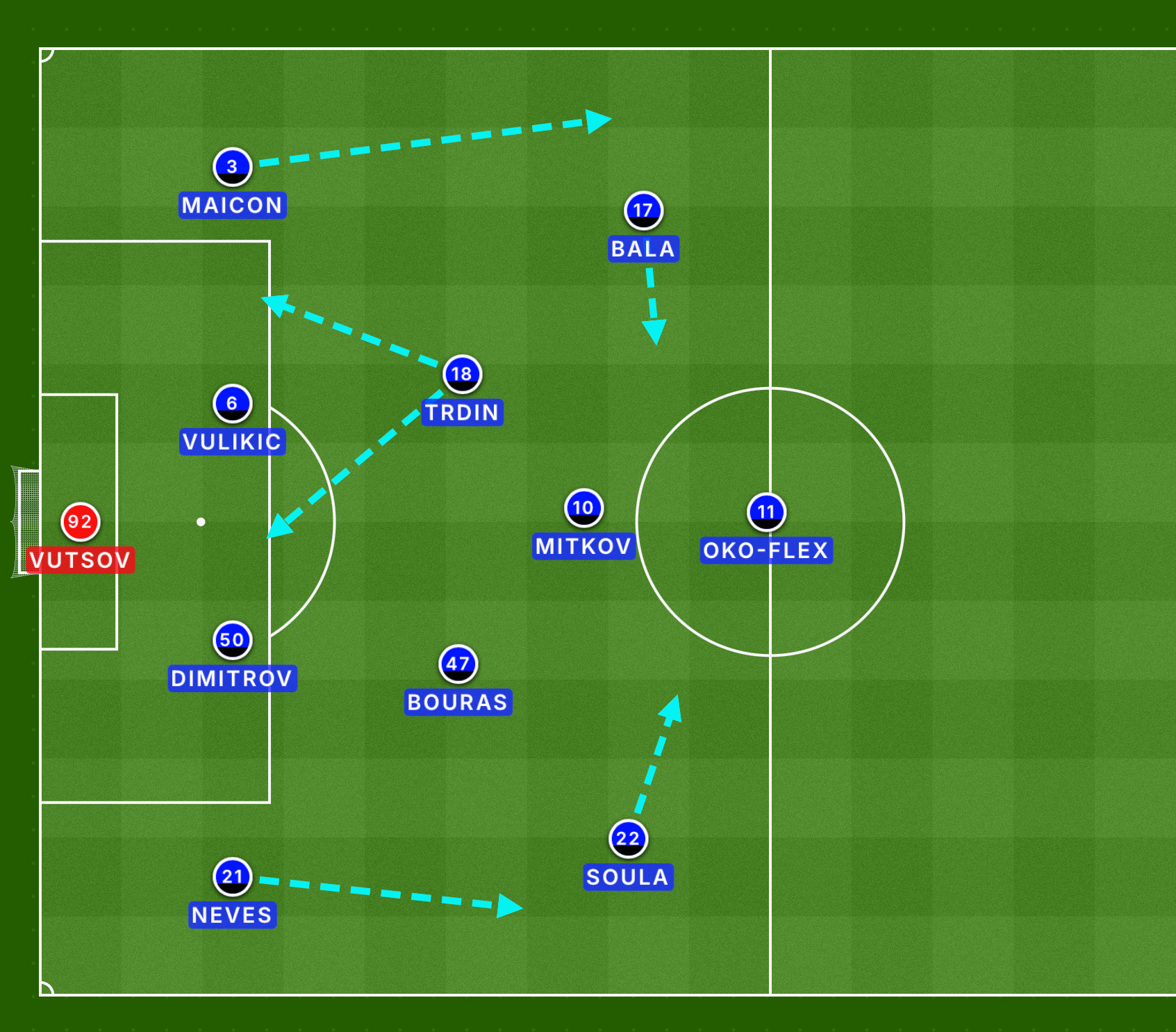
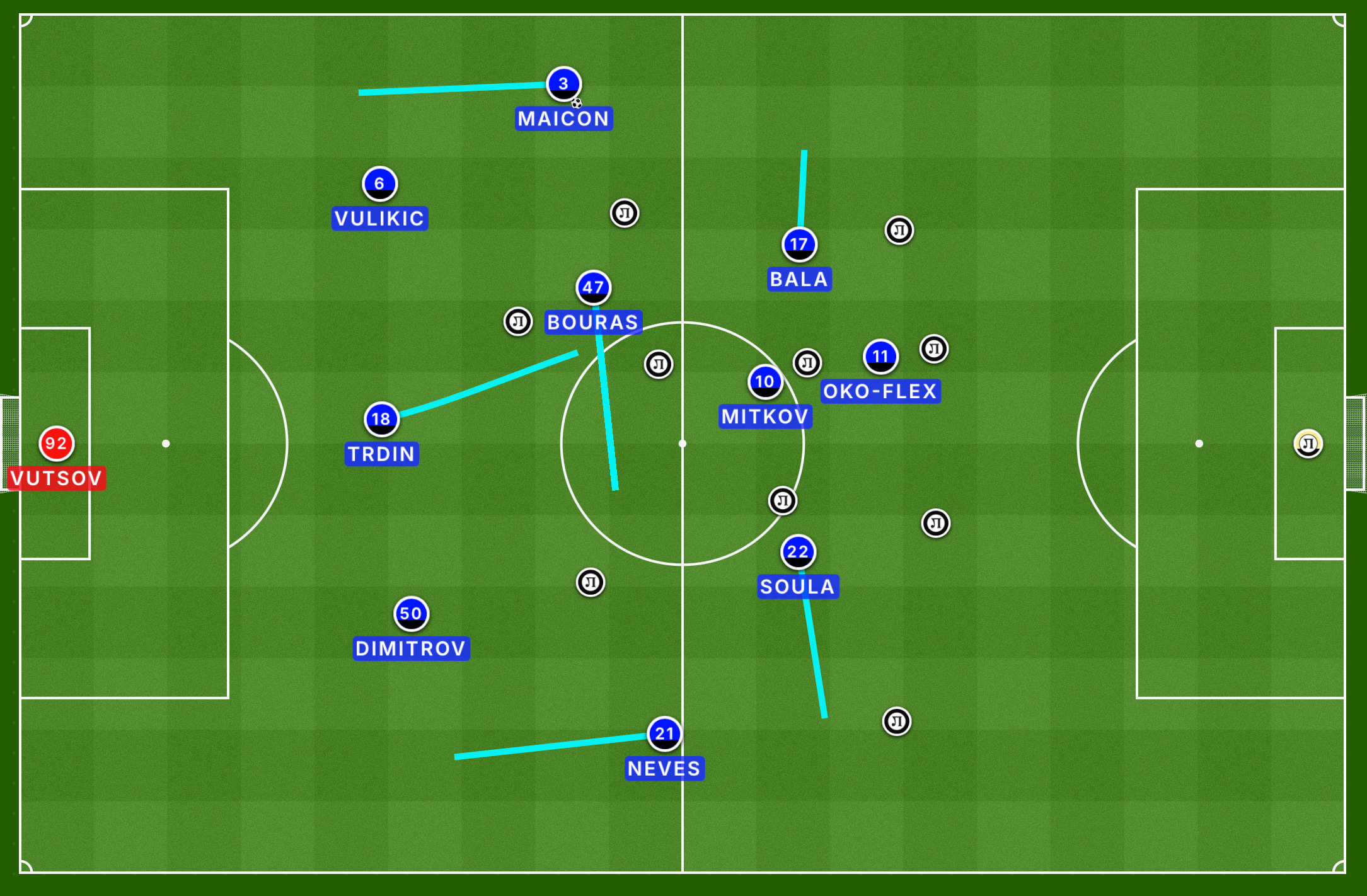
There is a noticeable left-sided bias in progression, where the full-back is encouraged to step into midfield and carry forward. This gives them a platform to advance play without relying on risk-heavy vertical passes.
Rather than forcing direct play, Levski are comfortable recycling until the correct structure appears.
Progression: Through and Around, rarely Over
Levski v Lokomotiv Plovdiv displayed are rarely a direct vertical side. Their progression comes in two main forms:
Through the centre, via overloads and a dropping number 10 linking play
Around the block, using full-backs and wide combinations
A key pattern is the use of clipped diagonals, often switching play into advanced full-back areas to create immediate crossing situations .
The attacking midfield unit contributes heavily here. Players rotate between lines, drift laterally, and combine in tight spaces, creating a fluid but still structured attacking network.
If they are to mix there game up and play more direct and vertical, you can be sure to see the likes of Sangare and Perea on the pitch.
Sangare - Focal point to focus play through, strong physical profile capable of holding the ball up and bringing players into the game. Physical presence can prove a problem for the opposition from set plays and crosses from wide areas, especially in a league that isn’t generally the most physical.
Perea - Physical profile similar to Sangare but more capable at exploiting the space in behind the opposition successful at stretching opposition allowing key players to receive between the line. Especially noticeable in transitions.
Final Third: Territory Without Constant Penetration
This is where Levski’s profile becomes more nuanced.
They are capable of:
Sustained pressure
High volumes of possession in advanced areas
Repeated entries into the final third
However, their attacking output often relies on:
Wide deliveries (crosses and cutbacks)
Third-man runs beyond the striker
Moments of individual quality rather than constant chance creation
The data and patterns suggest a team that can dominate territory without always converting that into high-quality chances consistently .
The structure is reliable, but at times overly positional, leading to slower attacking tempo and predictability in settled phases.
Out of Possession: Controlled but Not Compact Enough
Defensively, Levski operate in a mid-block setup.
They are effective at:
Limiting clear chances
Protecting central areas
Forcing opponents into lower-quality situations
But there is a consistent structural issue:
The distance between units can stretch, particularly when the front line presses and the defensive line drops
This creates pockets between midfield and defence, especially in right-sided areas
This isn’t a systemic collapse, but it is a repeatable vulnerability that better opponents can target quickly .
Everton Bala - The Conductor
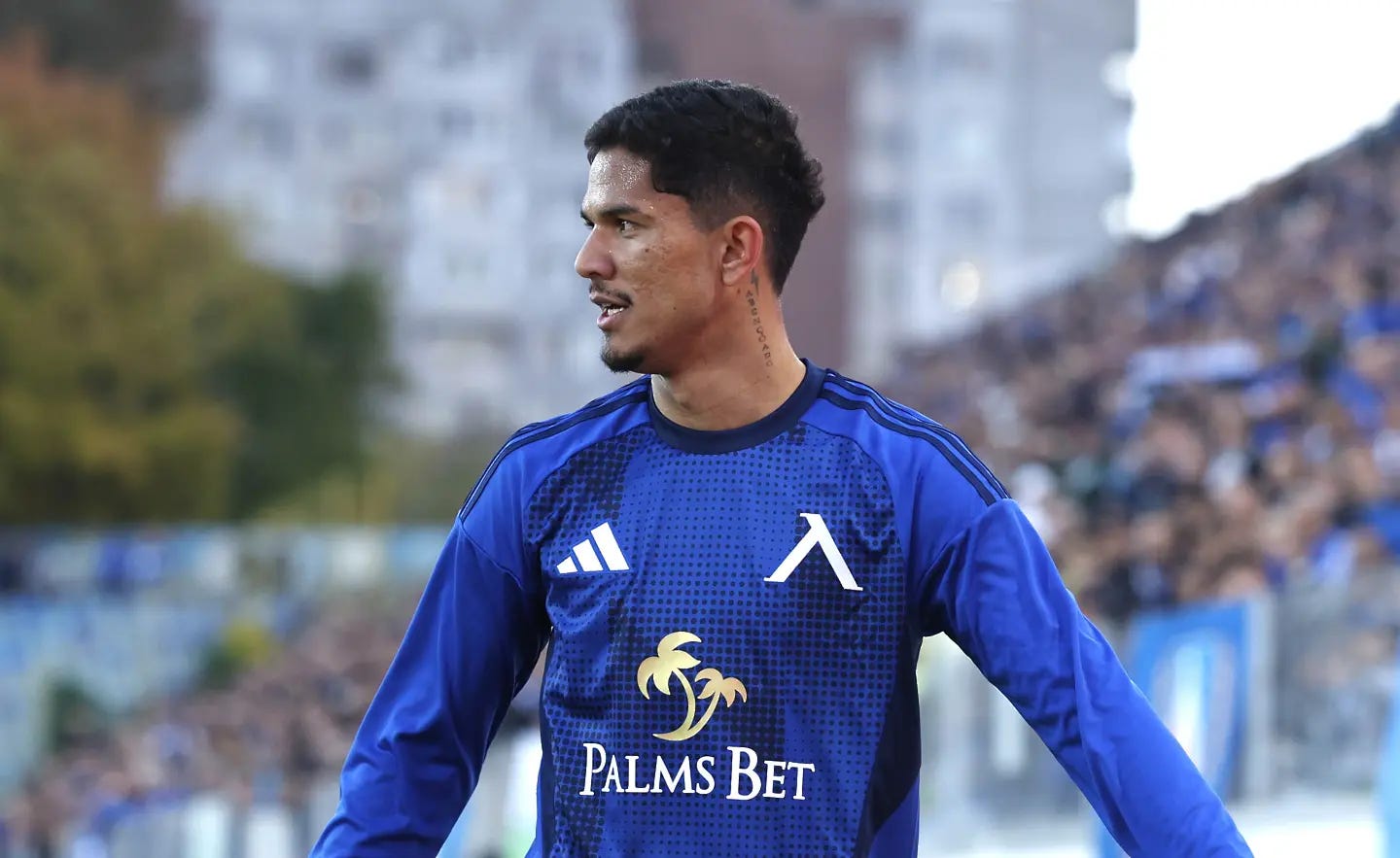
At the centre of Levski Sofia’s attacking structure is Everton Bala. More than simply the side’s leading scorer, he operates as the conductor of the offence, constantly connecting movements across the frontline and giving structure to Levski’s positional play.
What stands out most is his intelligence without the ball. Bala consistently recognises where teammates want to attack space and adjusts his own positioning accordingly, plugging gaps and creating connections between lines. He understands when to come short to receive into feet and help progression, but equally has the timing and awareness to threaten in behind when space opens. His spatial awareness is arguably his biggest strength. He regularly arrives in the right zones at the right moments, whether occupying defenders centrally, drifting away from pressure or attacking second phases around the box.
Statistically, his output has been exceptional. Bala is averaging 0.63 goals per game from an xG of 0.36, significantly over performing his expected return, although it is important contextually to note that penalties contribute to those numbers. Still, the efficiency and composure in front of goal have been major factors in Levski’s title push.
His versatility is equally valuable. Across the season he has operated as an attacking midfielder, centre forward and winger, often rotating fluidly depending on the phase of play. That flexibility allows Levski to maintain the same positional principles regardless of personnel rotations within the front line.
Technically, he is also one of the side’s best penetrative passers. Bala consistently looks to break defensive lines with disguised through balls and threaded passes between defenders. That stands out even more within the context of Bulgarian football, where pitches often appear heavier than many other leagues around Europe, with longer grass slowing circulation speed and making sharp vertical passing more difficult to execute consistently.
Kostadinov - The On-Field Coach
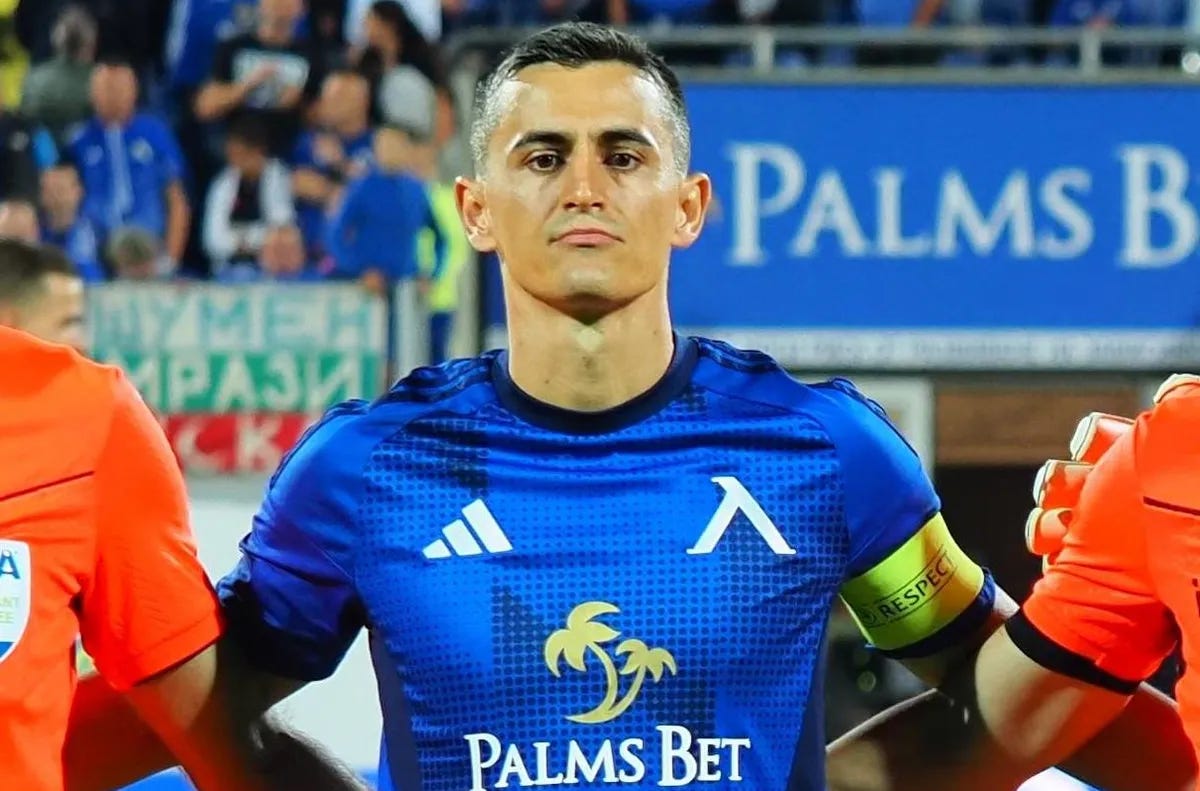
At 35 years old, Georgi Kostadinov has returned to Levski Sofia after spells abroad in both Cyprus and Russia. Having already experienced life at the club during his previous period in 2015, he arrived back in Sofia with a clear understanding of what the badge demands and what the environment around the club expects.
That familiarity matters. Kostadinov understands the pressure that comes with representing Levski. He understands the supporters, the emotion around the club and the weight attached to performances in Sofia. Just as importantly, he understands the league itself. The tempo, the tactical trends and the personalities within Bulgarian football are not new to him.
On the pitch, his influence often stretches beyond simply being another midfielder. He operates almost like an extension of the coaching staff during matches. Constantly communicating, organising team-mates and helping maintain structure within games. His experience in European competition also gives Levski an important calming presence in moments where game management becomes crucial.
Even when not starting, his value within the dressing room appears significant. For a side balancing experienced players with younger profiles, Kostadinov gives Levski a figure who understands both the standards of the club and the mentality required to compete for titles.
I will attach a short video below displaying his leadership skills and influence on the dressing room after the latest derby win over Sofia rivals CSKA Sofia. (you can skip to 01:25)
Kristian Dimitrov - Dependable Defensive General
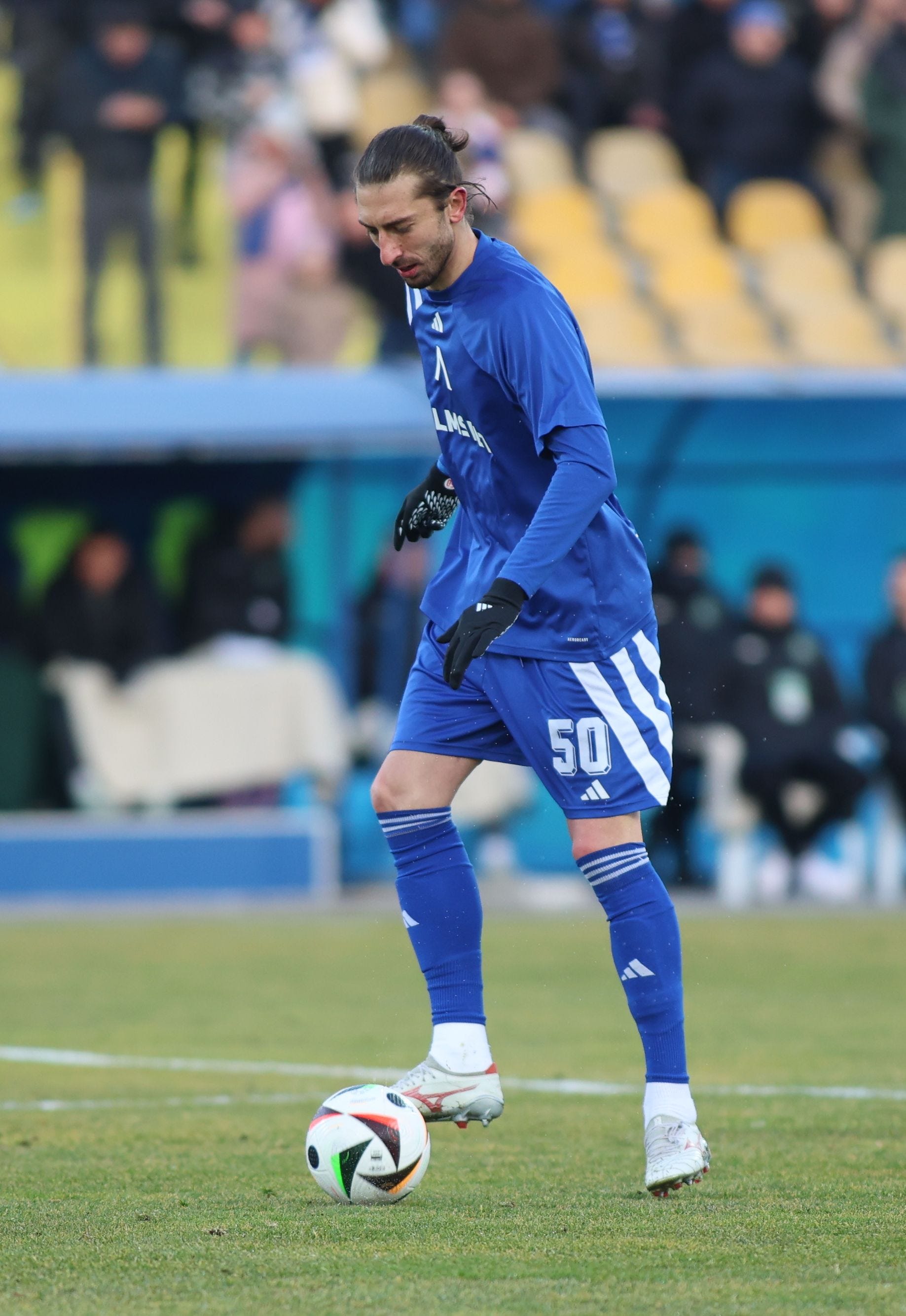
Kristian Dimitrov returned to Bulgaria carrying valuable experience from Croatian football, having already tested himself in a league operating at a higher overall level and intensity. That period abroad appears to have added maturity and composure to his game, particularly within structured possession phases.
For Levski Sofia, Dimitrov has become a dependable presence rather than a centre-back who fluctuates heavily in performance levels. One of his biggest strengths is availability. He is consistently fit, rarely injured and regularly accessible to the coaching staff across long stretches of the season. In leagues where squad depth can quickly become exposed, that reliability carries major value.
Within possession, he looks comfortable operating in a ball-dominant side. He does not appear rushed in circulation and is capable of contributing to controlled build-up phases rather than simply clearing pressure early. That composure allows Levski to maintain rhythm from deeper areas of the pitch.
Alongside the technical side of his game, Dimitrov also shows visible leadership qualities. Organising team-mates, communicating across the defensive line and maintaining concentration levels throughout matches. He may not always be the loudest figure externally, but internally he provides Levski with stability and consistency at the heart of the defence.
Julio Velázquez. Emotion and Structure
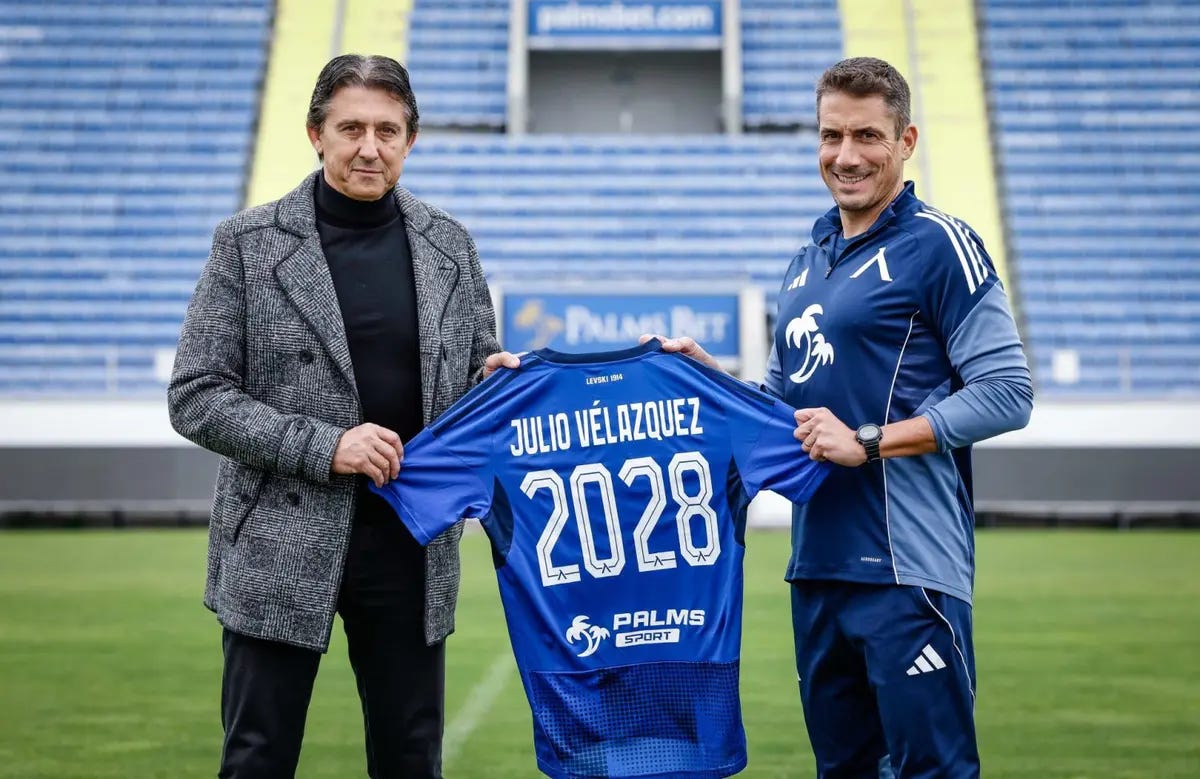
Julio Velázquez feels like a uniquely suited character for the environment surrounding Levski Sofia. Beyond the tactical side, there is a personality and intensity to him that appears naturally aligned with the emotion of football in Sofia. The pressure, the expectation and the ultras atmosphere do not seem to overwhelm him. If anything, he appears energised by it.
Part of that may come from how unusually long he has lived within coaching environments. Velázquez reportedly began coaching at just 15 years old and quickly developed a reputation in Spain as one of the country’s brightest young tactical minds. His rise at Villarreal CF B was particularly notable, becoming the youngest manager ever to coach in Spain’s Segunda B at the time. That background gives the impression of somebody who has effectively spent most of his life immersed in tactical detail, squad management and dressing room dynamics.
On the touchline, that passion is impossible to miss. He is highly expressive throughout matches, emotionally connected to every phase of play and constantly reacting to momentum swings within games. There are similarities in personality to the type of emotional touchline presence often associated with Mikel Arteta. Not necessarily through theatrics outside the technical area, but through visible intensity and engagement with the match itself.
Tactically, Velázquez leans heavily towards positional play principles. During build-up phases, it is common to see one of the deeper midfielders drop into the back line, creating improved circulation angles and allowing the full-backs to advance aggressively into attacking areas. The objective often appears to be stretching opponents horizontally before exploiting spaces between defensive lines.
What also stands out is his desire for tactical variety in the final third. Levski do not look built around one attacking pattern alone. Instead, the squad appears carefully constructed to provide different solutions against different defensive structures.
That balance can especially be seen in the full-back profiles he has assembled. Maicon offers a more technical interpretation of the role. Comfortable combining in tight spaces, inverting centrally and helping sustain possession. Meanwhile, players such as Christian Makoun Kamdem and Aldair provide a more explosive dimension with athleticism, speed and the ability to aggressively attack space during switches of play.
The end result is a squad that feels balanced between youth and experience, Bulgarian leadership and carefully selected foreign profiles. More importantly, it feels like a squad built with a very clear tactical vision behind it.
Champions League 2026-27
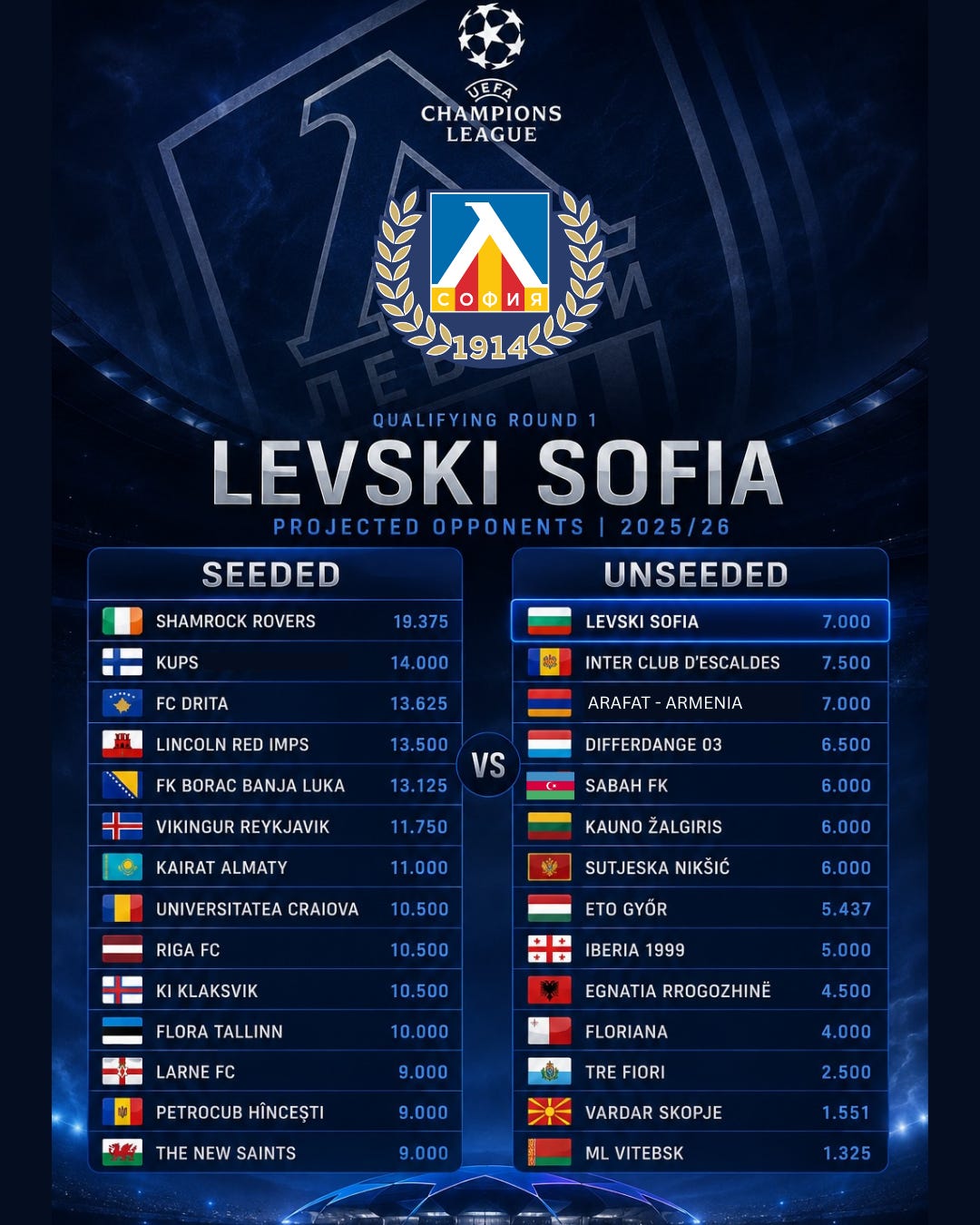
Data in graphic taken from “Football Meets Data”
For the first time in a long time, there is genuine excitement around Levski Sofia heading into the UEFA Champions League qualifying rounds. After years without a league title, supporters finally have the opportunity to dream about European nights carrying real significance again.
Naturally, ambitions around the club will be high. Supporters will hope Levski can push towards either Champions League or Europa League football, with the minimum expectation likely being qualification for the UEFA Conference League. The reality, however, is that much will depend on the draw. Europa League qualification feels possible but heavily tied to the calibre of opponents they are matched against during the early rounds.
One of the challenges Levski now face is their coefficient situation. Years without sustained Champions League participation have damaged their ranking by the club’s historical standards, meaning they are likely to enter qualifiers unseeded against stronger opponents on paper.
That makes the opening qualifying round particularly important. Should Levski progress through it, the pathway towards securing at least Europa League football becomes far more realistic. If they fail, pressure and disappointment will quickly grow, especially with Conference League qualification then requiring a longer run of successful ties through a more difficult route.
ESC Players for British Clubs to watch:
Armstrong Oko-Flex
Projected level: League One
Previously developed within the UK system, Oko-Flex profiles as a technically tidy winger with strong athletic qualities and clear suitability to League One football. Most effective operating from the left side with the freedom to attack inside onto his stronger right foot, he looks capable of fitting into most systems that prioritise isolating wide players in 1v1 situations.
Levski Sofia have arguably created the ideal environment for him stylistically this season. Their structure consistently looks to isolate him against defenders where he can attack both the inside and outside shoulder. When confident, he carries genuine unpredictability and can destabilise defensive structures through direct running.
Maicon
Projected level: Upper League One / Lower Championship
Maicon is a very technically gifted left-footed full-back who would likely suit possession-dominant teams within the EFL. Extremely comfortable receiving under pressure, he consistently plays quickly in one and two-touch sequences across all areas of the pitch and contributes heavily to build-up circulation.
In possession, he offers tactical flexibility. Capable of inverting into central areas to support midfield build-up or overlapping aggressively on the outside, he has been a major creative influence for Levski throughout the season.
There are, however, physical mitigations that clubs would need to consider. His size and top-end recovery speed could become exposed in more transition-heavy leagues. Over shorter distances of around 5–10 yards he has enough acceleration to burst away from opponents or recover defensively, but across longer distances his pace visibly drops off.
From a system perspective, there are question marks around whether his profile naturally suits a back three structure. He currently appears most comfortable operating within a back four where he can selectively invert or advance with protection around him.
Aldair
Projected level: League One
Aldair fits many of the physical characteristics traditionally associated with League One football. Powerful athletically with strong top-end speed, he covers ground well, can recover defensively in transition and consistently threatens space beyond opponents from wide areas.
His most dangerous moments often come when attacking the outside channel and arriving at the byline to deliver crosses after switches of play. In open-field situations, his athletic profile immediately stands out.
Technically, there are more limitations once he is forced into central areas or required to operate within tighter positional structures. His spatial awareness can become exposed when receiving centrally rather than playing with the game in front of him from wider positions.
Similarly to Maicon, there are doubts as to whether his strongest qualities would translate naturally into a back three system. His profile currently looks better suited to an aggressive full-back role within a four where he can attack space early and play facing forward.