

Dinamo Zagreb Preview
Looking at all things Dinamo Zagreb with the beginning of the HNL campaign.

2024–25 season
Dinamo Zagreb entered the 2024–25 campaign as defending champions of the Croatian league. However, the season marked a significant fall in the clubs performance, both domestically and in Europe. In the domestic league, Dinamo finished level on 65 points with HNK Rijeka, but lost the title due to an inferior head to head record. This was the first time since 2016–17 that Dinamo failed to win the league.
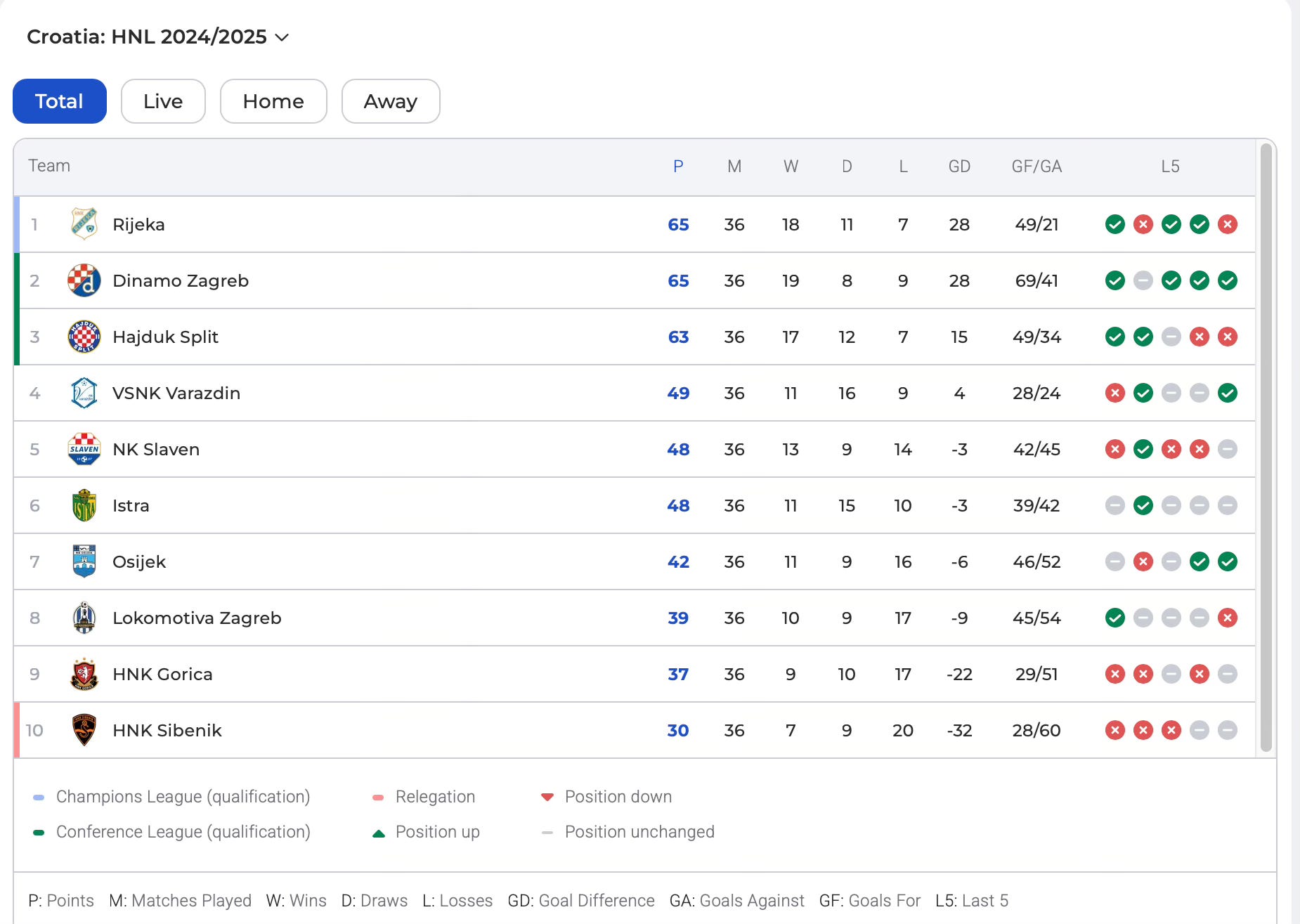
The club also exited the Croatian Cup at the quarter-final stage, meaning they ended the season without a domestic trophy. In European competition, Dinamo qualified for the newly introduced UEFA Champions League league phase, where they secured a notable victory over AC Milan but ultimately placed 25th, just outside the top 24 needed to progress to the knockout stage missing out on goal difference. As a result, Dinamo dropped into the UEFA Europa Conference League qualifiers, representing a major financial and sporting setback.
Several factors contributed to the club’s severe drop in standards. The team conceded 41 goals in the league, an unusually high total by Dinamo’s standards, and consistently failed to deliver in high stakes matches. By March, the club faced criticism for lacking a coherent and consistent tactical approach, which could be explained in large part due to the on pitch leadership, and coaching stability. Croatian media outlets described the situation as a “collapse on all levels,” citing internal unrest and poor decision making from club leadership. Despite investing €11 million in new signings, the club failed to prevent the decline.
The 2024–25 season concluded without silverware, ending Dinamo’s seven year dominance in Croatian football and calls for systemic change at the club.
Three Managers, One Tumultuous Season
One major reason for Dinamo’s struggles was the managerial chaos that engulfed the club. In the span of one season, Dinamo went through three different head coaches (plus interim stints) – an extraordinary turnover that epitomized the instability.
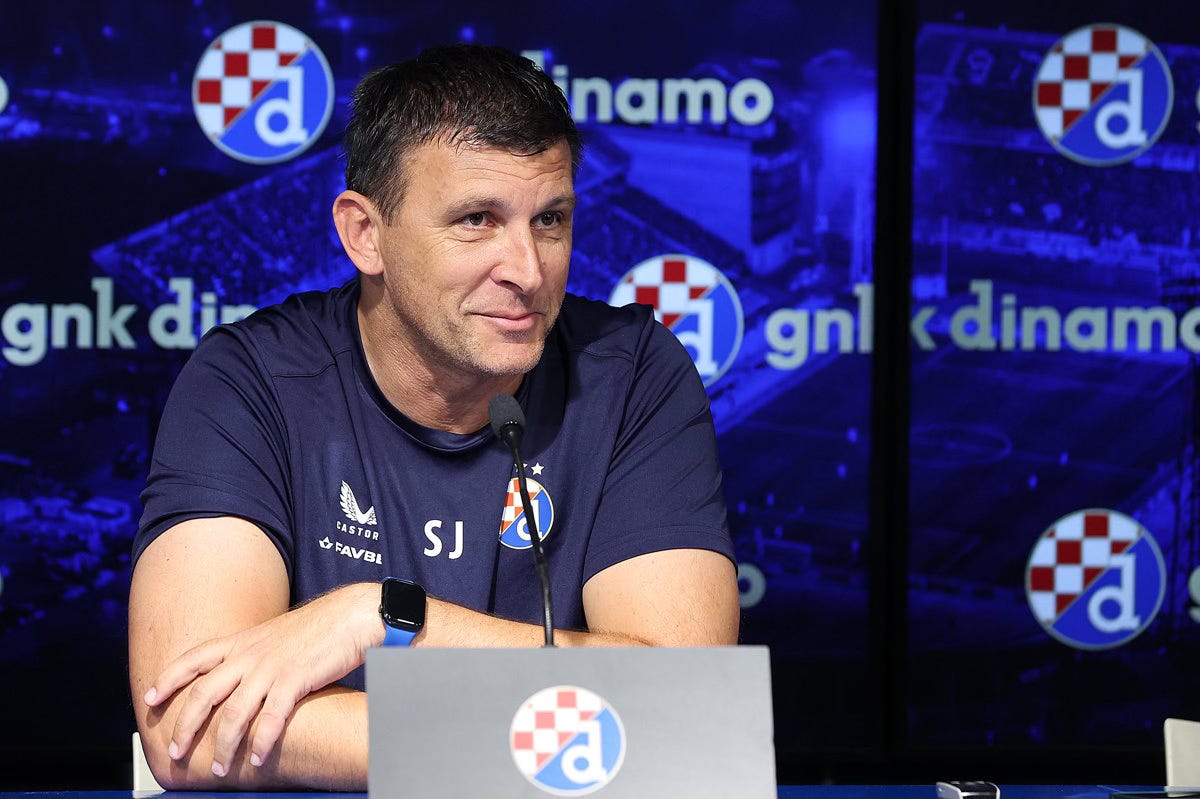
Sergej Jakirović began 2024/25 in charge, having won a league and cup double the previous year. However, a poor start saw him dismissed by mid-September after a 9–2 loss to Bayern Munich in Dinamo’s Champions League opener. That record defeat in Munich seemed to be the final straw. The club leaders held an emergency meeting after returning to Zagreb and seemingly agreed to Jakirović was not the right man to take the club forward. It wasn’t just the Bayern game, as Dinamo had also dropped league points, drawing 1–1 at Rijeka and losing 0–1 at home to Hajduk Split just before, slipping behind both rivals in the table . The humiliation in Europe and stumbles at home signaled that “nešto unutar momčadi ipak ne štima” (something within the team wasn’t right). After 13 succesful months at the helm and a domestic double, Jakirović was out, marking an abrupt end to his tenure.
Below I will leave a link to a previous article looking at Jakirović going into his new role at Hull City

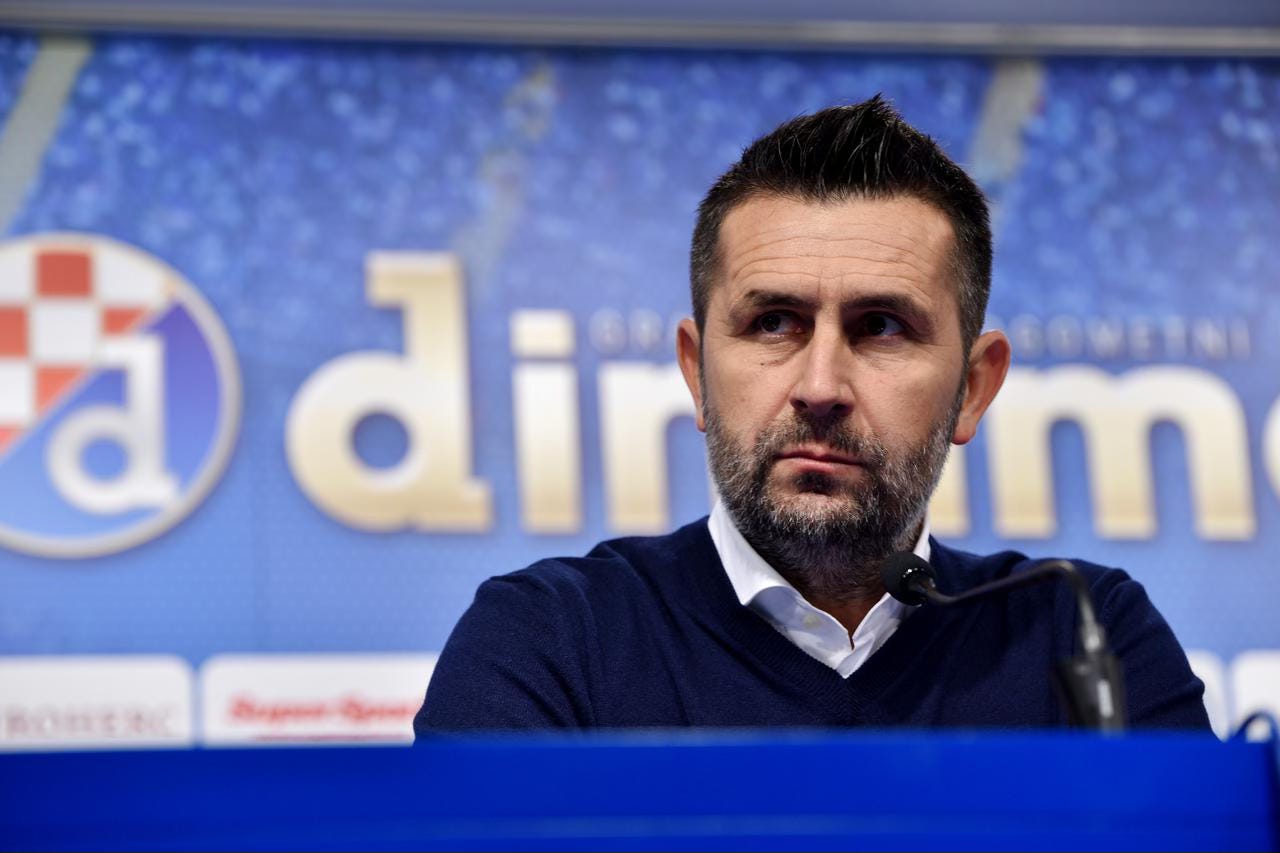
Nenad Bjelica was appointed in late September as the man to stabilise Dinamo. A former Dinamo coach (2018–2020) who had been a hero in his first stint, Bjelica returned amid high expectations. Initially, he delivered in Europe with Dinamo collecting 8 points from the first 5 Champions League games under him, even staying in contention for the knockout phase. Those results earned the club a handsome €5.6 million in UEFA prize money and boosted Dinamo’s coefficient, raising hopes of a direct UCL spot if they retained the title . But domestically, Bjelica’s impact was disappointing. “Momčad je pod njim imala dva lica” – the team under him had two faces, excellent in Europe but awful in the HNL. Which was a significant problem for Dinamo Zagreb, a club where domestic success isn’t desired it is demanded. In 11 league rounds with Bjelica, Dinamo won only 4 games, one of the club’s worst domestic runs in years. They suffered league defeats to Osijek, Hajduk and Lokomotiva and drew with several lower sides (Istra, Gorica, Rijeka, Slaven). By winter break, Dinamo looked “as if it wasn’t capable” of winning the league. Bjelica faced an injury crisis which plagued the squad, and he had inherited a team mid-season without a preseason to shape it. Yet even with those excuses, results were far below par. The board ultimately decided a change was needed to rescue the title challenge. In late December, Bjelica was sacked just three months in, despite having received public backing shortly before. The club praised his Champions League success but regardless this was not enough for a club of the prestige of Dinamo. Bjelica’s second stint thus ended in a “debakl” , a stark contrast to his prior heroic spell.
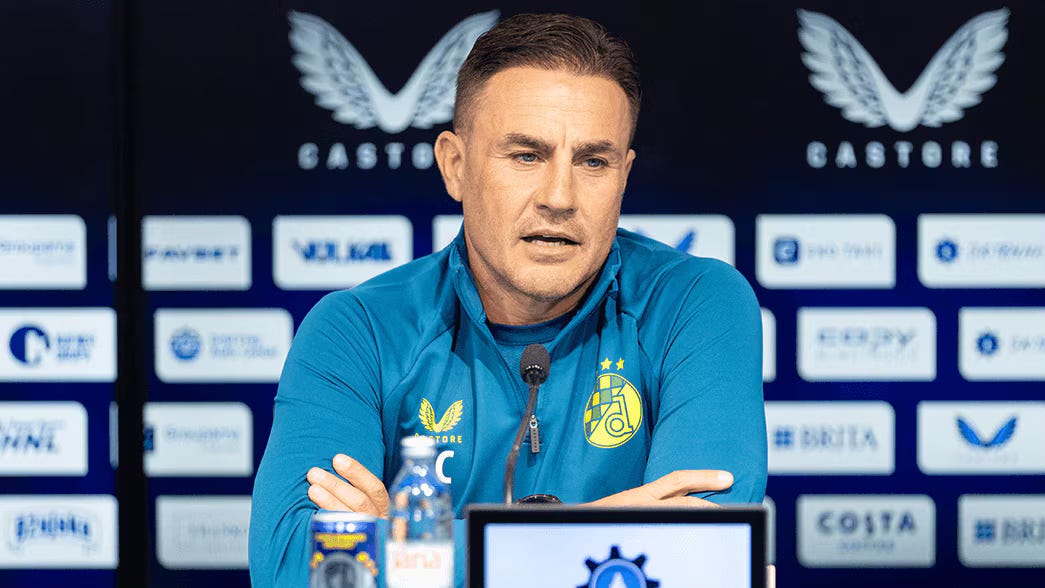
Fabio Cannavaro, the 2006 World Cup-winning captain for Italy, took over in January 2025 amid much fanfare. The idea was that Cannavaro’s charisma and defensive pedigree could inspire a change in the clubs fortunes. Dinamo’s sporting director promised a “zaokret u rezultatima u HNL-u” (turnaround in league results) and lauded Cannavaro’s attacking style and experience winning a title in China. Cannavaro signed a contract through 2026 and inherited a team in second place. Unfortunately, the on-field results did not match the hype. In 10 league matches under Cannavaro, Dinamo managed 5 wins, 2 draws and 3 losses, ultimately this was not enough to close the gap. By early April, Dinamo had dropped to third place, a full 7–8 points behind the leader (at one point trailing fierce rivals Hajduk Split by 8 points in March). Cannavaro’s tenure saw the team continue to falter in big domestic games. He won only against bottom-half sides (Istra, Šibenik, Gorica, etc.), while in four derbies against Osijek, Rijeka, and Hajduk his team failed to win a single one. The media criticised his frequent lineup tinkering and what they deemed to be puzzling tactical choices for instance, playing winger Arber Hoxha out of position on the right, or fielding a makeshift defence with players in unfamiliar roles. Despite Cannavaro’s legendary status as a defender, Dinamo kept conceding “glupe golove iz prekida” (silly goals from set-pieces) and repeating the same errors every match. His intense training regimen was even blamed for a spate of muscle injuries in the squad. With Dinamo’s title hopes fading, the club pulled the plug. On April 9, 2025, Cannavaro was sacked after just over three months, making him the third coach fired that season. “The team fell out of contention to win an eighth straight title,” the club said bluntly. Cannavaro departed with Dinamo sitting third and likely facing Europa Conference League qualification, a far cry from the Champions League nights he oversaw. (Notably, Cannavaro did have one high point a 2–1 Champions League victory over AC Milan, but even that wasn’t enough to save him .) In a parting statement, Cannavaro remarked, “If I’m the problem, I can leave. But how many coaches will you change?” a pointed reference to Dinamo’s revolving door. Indeed, managerial instability was a core issue in 2024/25. Changing coaches three times created tactical inconsistency and psychological uncertainty, undercutting the team’s performance. By season’s end, it was clear that Dinamo’s problems ran deeper than any single coach.
A New Era Under Mario Kovačević?
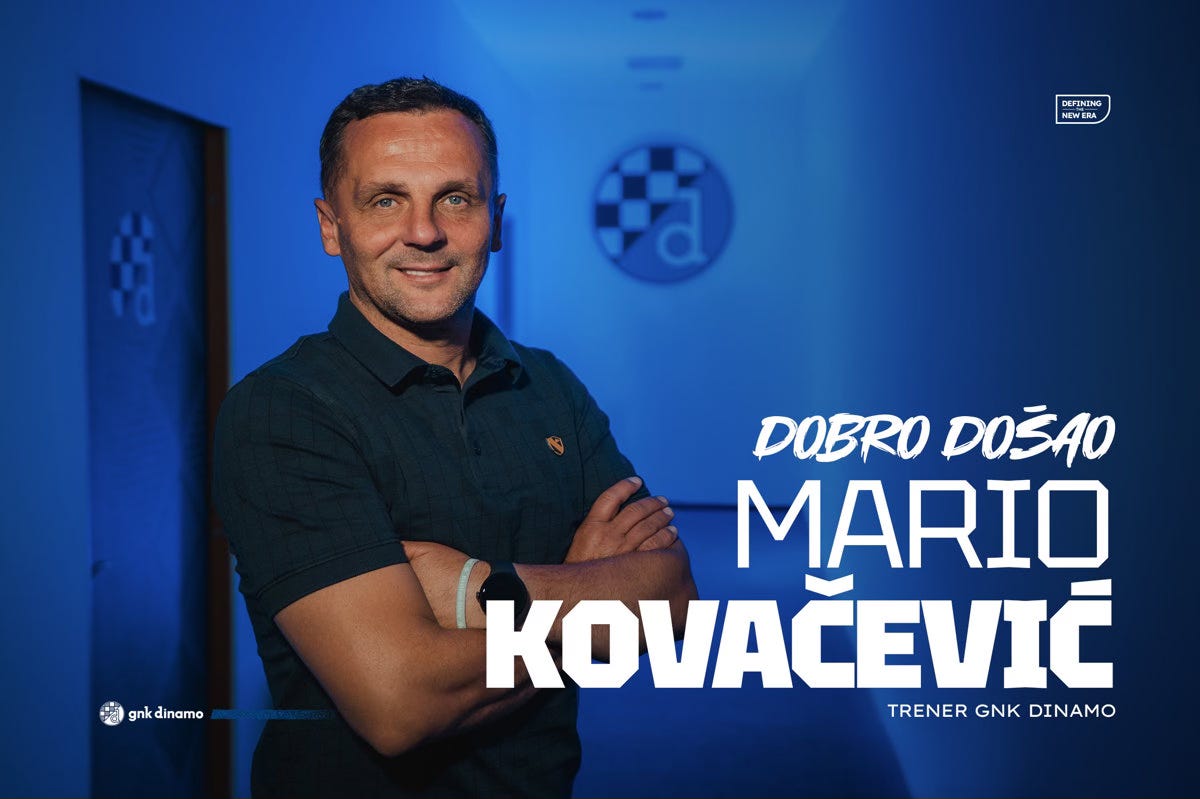
After careful reflection of 2024/25 season, Dinamo’s leadership looked for an opportunity to reset and bring stability for the new season. The solution was to go back to basics with a homegrown coach. In June 2025, Dinamo appointed Mario Kovačević as the new head coach, marking a departure from the high profile foreign names. Kovačević, 48, is a Croatian-Bosnian coach who earned his reputation working his way up the local football pyramid. In the 2024/25 season, he led underdogs Slaven Belupo to a Croatian Cup final and a 5th place league finish, an impressive overachievement with modest resources. His Slaven side was noted for “attractive football and tactical discipline” , catching the eye of Dinamo’s directors. Kovačević had also previously managed Varaždin, taking them to the top flight, and he is known for developing young players. This track record of building teams from the ground up and achieving success with limited budgets made him an appealing choice for a Dinamo in need of renewal.
The hiring of Kovačević coincided with a broader changing of the guard at the club. Legendary former captain Zvonimir Boban returned to Dinamo as the new CEO (chairman of the board) on June 1, 2025 , bringing leadership and vision from his years as a top executive in FIFA and AC Milan. It was reported that Boban picked Kovačević as his first coaching appointment, “the first and only choice” for the job. Kovačević himself acknowledged how significant Boban’s backing is: “Blago onom treneru kojeg izabere Boban, jer će stajati iza njega” – blessed is the coach chosen by Boban, because he will stand behind him. This vote of confidence implies that, unlike his predecessors, Kovačević will get patience and support from the top as he rebuilds the team.
In his introductory press conference, Mario Kovačević struck a tone of pride and determination. “I must thank the people at Dinamo for giving me the opportunity to lead our most successful club… I am aware of the expectations, challenges… I am not afraid. I love challenges,” he said. Kovačević emphasised a clear football philosophy: “organised, modern attacking football” that he believes will both bring results and entertain the fans. He comes across as a modest, hard working coach who values discipline, noting that hard work and humility are key principles he instills in his players (he wants them to “be aware of where they are… Everything else is a lie,” he told the squad). Crucially, Kovačević has targeted an immediate return to the top: “The most important thing for us is the championship, to regain the title of champions… We want to show that last season was an exception and take the position that belongs to us”. This statement underpins Dinamo’s intent to reclaim the domestic top spot in 2025/26.
Summer 2025 Transfers – Rebuild and the Scott McKenna Deal
Squad overhaul and transfer activity (Summer 2025)
In response to a disappointing 2024–25 campaign, GNK Dinamo Zagreb embarked on a significant restructuring of both its leadership and playing personnel. The club utilised substantial revenue from UEFA competitions and player sales to fund a broad refresh of the first team squad.
Participation in the UEFA Champions League, league phase brought in approximately €40 million in prize money. Coupled with high profile outgoing transfers, Dinamo recorded a positive net balance during the 2025 summer transfer window generating around €35.15 million in income against €15.8 million in spending. The funds were reinvested in new signings, as part of a wider effort to revitalise the squad.
Notable departures
The summer saw the departure of several key figures. Midfield playmaker Martin Baturina, aged 22, joined Italian side Como 1907 for a reported fee of €18 million, while 21-year-old defensive midfielder Petar Sučić completed a move to Inter Milan for €14 million. These two deals alone brought in over €32 million, reinforcing Dinamo’s strategy of developing homegrown talent and selling at a premium.
Additional exits included French forward Wilfried Kanga, who joined KAA Gent for approximately €1.2 million, and Maxime Bernauer, whose loan was converted to a permanent transfer by Saint-Étienne. Several long serving players also departed. Striker Bruno Petković left on a free transfer to a club in Turkey, ending a distinguished spell in Zagreb. Long time captain Arijan Ademi, a symbol of the club for over a decade, also moved on joining Hungarian outfit Újpest FC on a free transfer at the age of 34. Other senior players, including right-back Stefan Ristovski and winger Luka Ivanušec (initially on loan before a permanent transfer), also left the club.
This marked the end of an era, with the departure of numerous veterans. However, it also allowed Dinamo to reduce its wage bill significantly and create space for emerging talents to take on greater responsibility. The summer 2025 window has widely been viewed in different media as a turning point, an intentional shift towards renewal and long term squad rebuilding.
New signings
Backed by increased revenue Dinamo Zagreb invested approximately €15.8 million during the 2025 summer transfer window to reinforce the squad across multiple positions. The club completed over a dozen first team signings, focusing on a blend of emerging talents and experienced internationals. Notable additions included:
Dion Beljo – A 23-year-old Croatian centre-forward signed from FC Augsburg for €4.0 million. Beljo, formerly of NK Osijek, is regarded as a high potential striker and is expected to fill the void left by Bruno Petković.
Gonzalo Villar – A 27-year-old Spanish midfielder acquired from Granada CF for €3.0 million. Villar, who previously featured in Serie A with AS Roma, adds technical quality and creative playmaking to the midfield. He is seen as a partial replacement for Martin Baturina and brings valuable European experience.
Matteo Pérez Vinlöf – A 19-year-old left-back signed from Bayern Munich’s reserve team for €2.0 million. Holding both Swedish and Peruvian nationality, Vinlöf is considered a long-term project and a successor for the left-back position. His signing reflects Dinamo’s ongoing emphasis on developing young talent.
Dejan Ljubičić – A 27-year-old Austrian international defensive midfielder joined on a free transfer from 1. FC Köln. Ljubičić is a versatile and combative midfielder whose arrival fills the gap left by Arijan Ademi, contributing both defensively and in terms of leadership.
Scott McKenna – A 28-year-old Scottish centre-back arrived on a free transfer from Las Palmas. His signing has been described as Dinamo’s standout acquisition of the summer.

Spotlight: The Scott McKenna signing 🏴
Among the summer’s new arrivals, the acquisition of Scott McKenna attracted considerable attention, both for the player’s pedigree and the manner in which the transfer was secured. A 28-year-old centre-back with experience in the English Premier League (Nottingham Forest) and La Liga (Las Palmas), McKenna became the first Scottish international to join the Croatian top flight.
McKenna’s availability was facilitated by a contractual clause allowing him to depart Las Palmas on a free transfer following their relegation from La Liga in 2023–24. Despite this, Dinamo faced competition for his signature, with reported interest from clubs including Rangers and Celtic.
The decisive factor proved to be the personal involvement of Zvonimir Boban. According to McKenna, a direct phone conversation with the Dinamo CEO, also a former Croatia captain and AC Milan legend was instrumental in his decision. Boban’s approach extended beyond football; McKenna noted that Boban also spoke with his partner, making them feel welcome even before arriving in Zagreb. “It wasn’t just about football, the whole family got involved,” McKenna remarked, adding that it “wasn’t a difficult decision” after hearing the club’s vision.
McKenna expressed enthusiasm about joining what he described as “a massive club” with regular European competition, and saw the move as a chance to win trophies while continuing to represent Scotland abroad.
Additional reinforcements included right-back Moris Vučkić (signed from Istra 1961 for €1.35 million), winger Mateo Lisica (€1.3 million from Istra), young second-striker Gabriel Vidović (Croatian U21 international from Bayern Munich, €1.2 million), Spanish defender Sergi Domínguez (€1.2 million from Barcelona Atlètic), as well as several domestic prospects such as Marko Soldo and Robert Mudražija.
In total, Dinamo secured around ten new players for notable fees, dramatically reshaping the squad in accordance with the new manager’s vision. The average age of the incoming signings was just 22.4 years, indicating a deliberate move towards youth. Dinamo concluded the window with a healthy net profit of approximately €19 million, maintaining the club’s financial stability.
Saturday 2nd August 2025, will see Dinamo Zagreb open the season against NK Osijek. Where they will hope to gain a win in order to kickstart the season and reclaim their spot at the top of Croatian football.
Very interesting article. Can I request you do one about rest of Croatian league especially the outsiders who won league and if this is likely to be repeated or a Leicester city type one off. Thanks